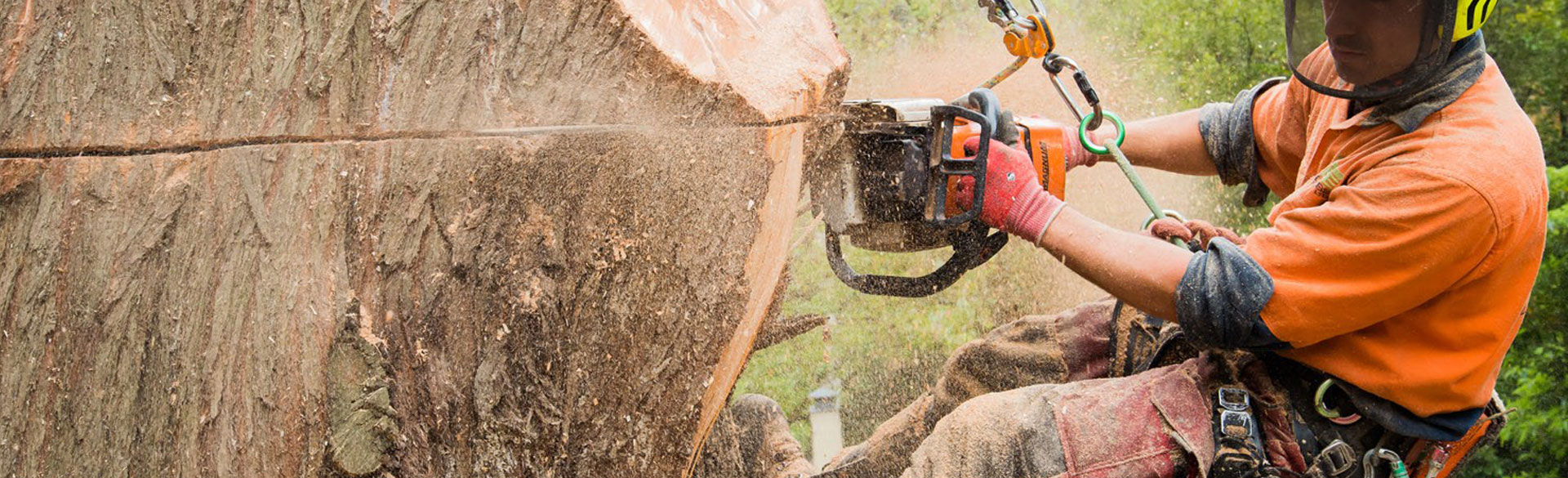
Overhanging branches are one of the most common reasons Hobart property owners call our Tree Climbing & Pruning service, and Tasmanian property owners generally have the right to prune back to their own boundary line, provided the tree isn’t protected and the work doesn’t damage the tree unreasonably. This is general information, not legal advice, always check current Tasmanian legislation or speak with a solicitor for property-specific disputes.
What You Can and Can’t Do With an Overhanging Branch
- Work must be done from your own side of the boundary, without entering the neighbour’s land
- Pruning must be proportionate and not damage the tree’s health or stability
- The tree must not be subject to a council heritage or significant tree listing, which can restrict pruning without a permit
Who Owns the Cut Branches?
Common law generally treats cut material as belonging to the tree’s owner, so strictly it should be offered back, though most neighbours are glad to have it removed.
What About Root Damage?
Root damage from an overhanging tree, lifted paving, cracked foundations, follows a similar principle, but cutting roots on a mature tree can seriously destabilise it. Our Arborist Consultation service can assess root risk before any cutting.
When Does Council Approval Matter?
Hobart and Southern Tasmanian councils vary in tree protection provisions. Significant, heritage-listed, or planning-overlay trees can’t be pruned without a permit even if overhanging your property, worth a quick council enquiry before major work.
What If the Tree Is Actually Dangerous?
A dead or structurally failing tree posing imminent risk is treated differently from a simple overhang nuisance. A written report from our Arborist Consultation service is the strongest first step if you believe a neighbouring tree is genuinely dangerous.
Get the Pruning Done Right
Our Tree Climbing & Pruning service handles boundary trees correctly, protecting the tree’s health and your legal position.
It’s also worth having any overhanging branch work documented with photos before and after, particularly if the tree in question has been a point of disagreement with a neighbour, since a clear record protects both parties if the matter is ever raised again.
Council rules on protected trees can change, and a tree that wasn’t listed a few years ago may since have been added to a significant tree register, so it’s worth a fresh enquiry even if you checked previously.
It’s also worth having any overhanging branch work documented with photos before and after, particularly if the tree has been a point of disagreement with a neighbour previously, since a clear record protects both parties if the matter is ever raised again.
Council rules on protected trees can and do change, and a tree that wasn’t listed a few years ago may since have been added to a significant tree register, so it’s worth a fresh enquiry even if you checked its status previously.
It’s also worth having any overhanging branch or root work checked against your specific council’s current tree protection provisions before starting, since even routine boundary pruning can require a permit in some overlay zones without an owner realising it.
Call 0407 128 633 any time for emergency response, or visit irwinclementstreeservice.com.au.